There’s something undeniably satisfying about a homemade meal that warms your soul. As I was rummaging through my fridge last week, I stumbled upon some flank steak and a few vibrant vegetables. That’s when inspiration struck: a Korean-Style Beef Rice Bowl! If you’re tired of fast food and looking for an easy yet mouthwatering dish to impress family and friends, this recipe has your name written all over it.
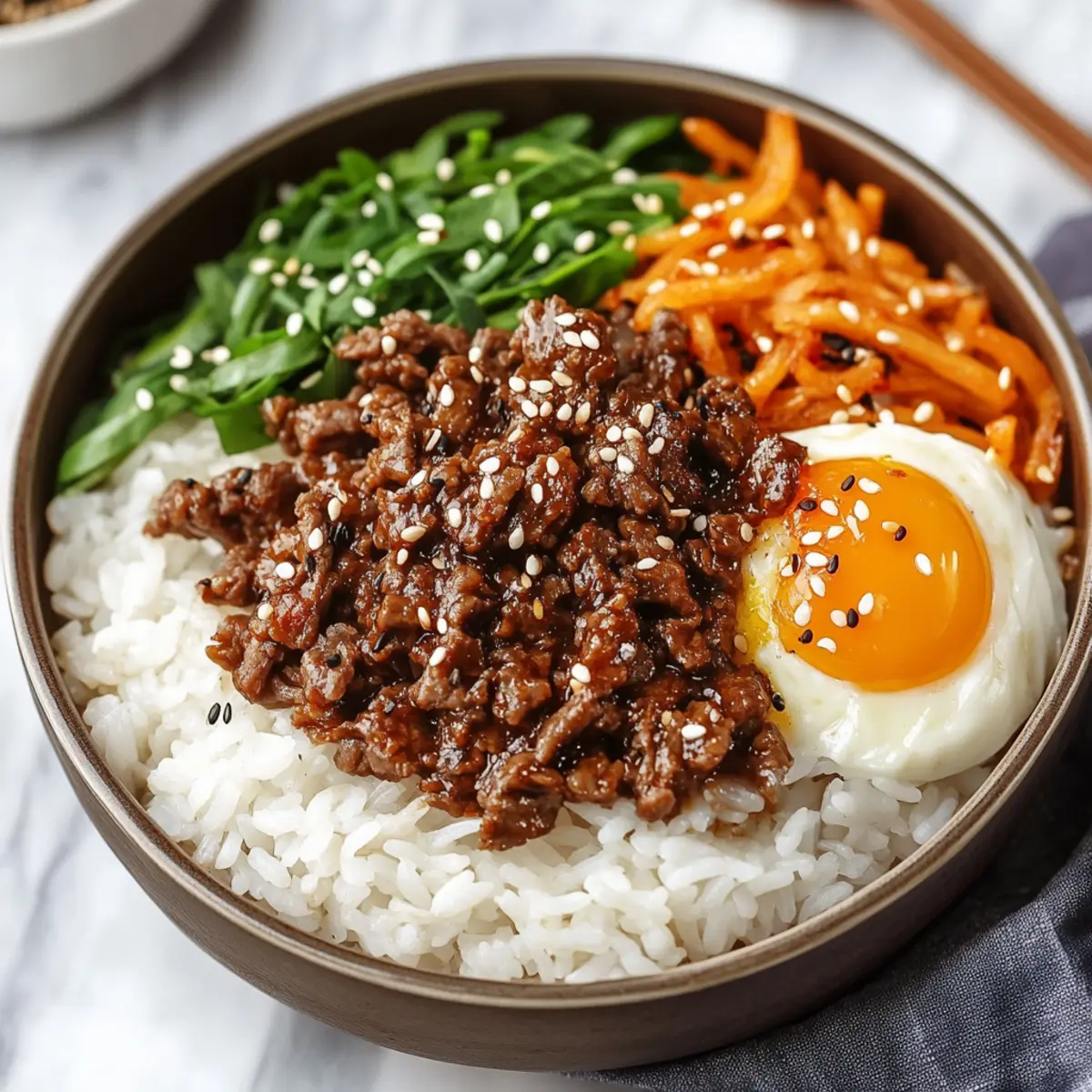
Imagine a bowl filled with tender marinated beef, colorful stir-fried veggies, and fluffy rice, topped with a perfectly fried egg and a sprinkle of sesame seeds – it’s not just food; it’s a celebration of flavors! In just 30 minutes, you can create a fun, easy-to-make meal that brings a delightful twist to weeknight dinners. So, let’s ditch the ordinary and bring a little taste of Korea into your kitchen!
Why You'll Love This Korean-Style Beef Rice Bowl
- This Korean-Style Beef Rice Bowl is incredibly easy to prepare, making it perfect for busy weeknights.
- The vibrant flavors of the marinated beef combined with fresh vegetables create a delicious and satisfying meal that everyone will enjoy.
- It’s versatile enough to customize with your favorite veggies or toppings, allowing you to make it your own every time.
- With its stunning presentation and colorful ingredients, this dish is not only tasty but visually appealing and great for impressing guests.
Korean-Style Beef Rice Bowl Ingredients
Get ready for a flavor-packed experience with these key ingredients!
For the Beef Marinade
- Flank steak – a tender cut that absorbs flavors beautifully.
- Soy sauce – adds a savory depth to the marinade.
- Brown sugar – balances the saltiness with a hint of sweetness.
- Sesame oil – infuses a nutty aroma that’s simply irresistible.
- Garlic – brings robust flavor; use fresh for the best impact.
- Ginger – adds a warm, spicy note that complements the beef.
- Rice vinegar – brightens the marinade with a tangy kick.
- Gochujang – a Korean chili paste that lends heat and complexity.
For the Rice Bowl
- Cooked rice – the perfect base; use jasmine or white rice for fluffiness.
- Vegetable oil – crucial for stir-frying; it helps achieve a nice sear on the beef.
- Carrots – thinly sliced for a sweet crunch that adds color.
- Bell peppers – vibrant and slightly sweet; they add freshness.
- Green onions – sprinkle on top for a burst of flavor and crunch.
- Fried eggs – a delicious finishing touch; the runny yolk enriches every bite.
- Sesame seeds – for a nutty garnish that enhances the dish visually.
With these ingredients ready to go, you’re just moments away from creating a delicious Korean-Style Beef Rice Bowl that will tantalize your taste buds and warm your heart!
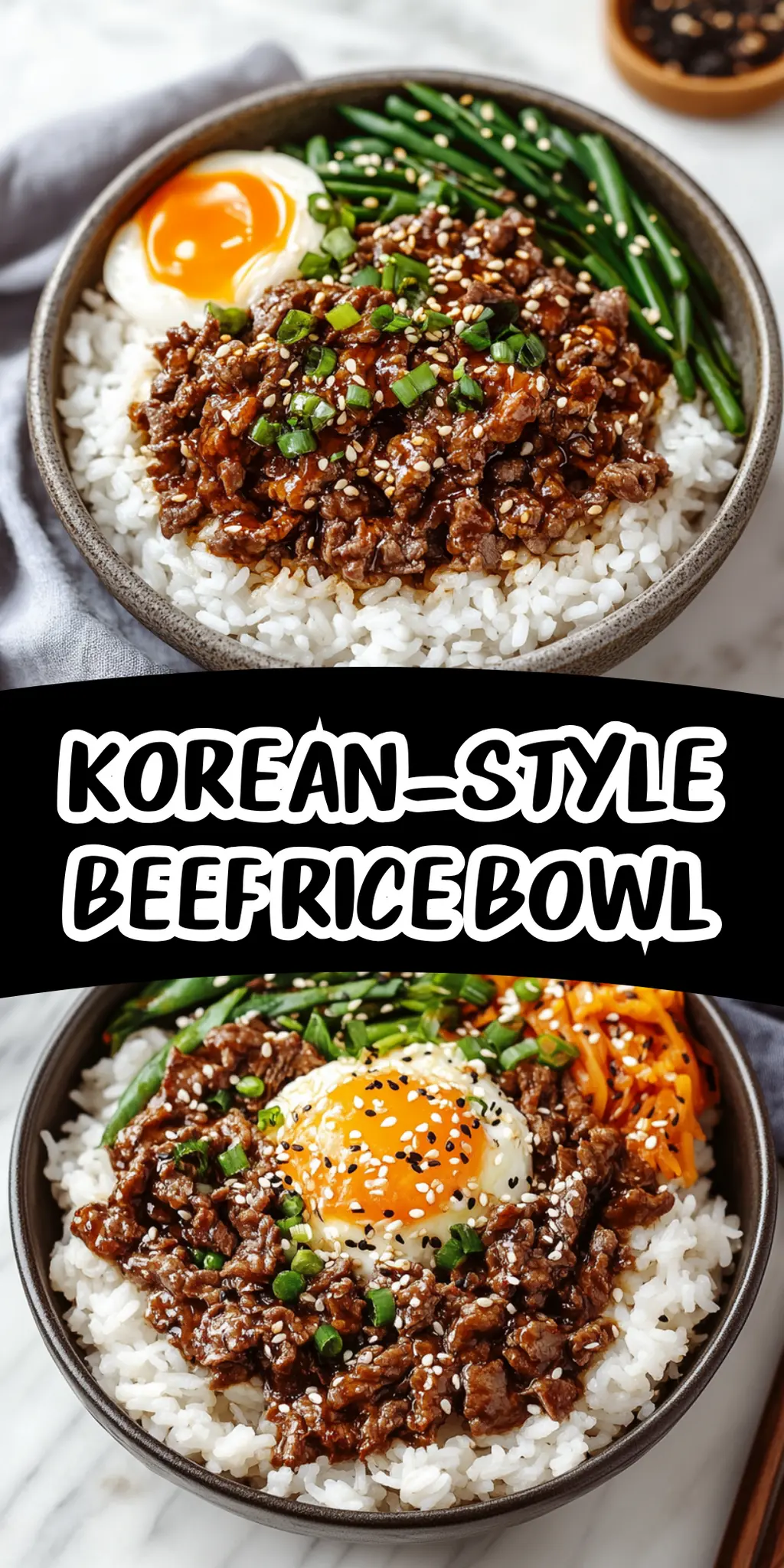
How to Make Korean-Style Beef Rice Bowl
-
Combine the Marinade: In a bowl, whisk together soy sauce, brown sugar, sesame oil, minced garlic, grated ginger, rice vinegar, and gochujang. This fragrant blend will elevate the beef, making it incredibly flavorful!
-
Marinate the Beef: Add sliced flank steak to the marinade. Ensure each piece is well coated and let it marinate for at least 15 minutes, or up to 2 hours in the refrigerator for deeper flavor.
-
Heat the Pan: In a large skillet or wok, heat vegetable oil over medium-high heat. Make sure the oil shimmers, indicating it’s hot enough for cooking the beef.
-
Cook the Beef: Place the marinated beef in a single layer in the skillet. Cook for 3-4 minutes, stirring frequently, until browned and cooked through. Remove from the heat and set aside.
-
Stir-Fry the Veggies: In the same skillet, toss in julienned carrots and sliced bell peppers. Stir-fry for 3-5 minutes until they are tender yet still crisp, adding a burst of color to your bowl.
-
Prepare the Rice: Divide the cooked rice among your serving bowls. It serves as a warm and fluffy base for your delicious toppings.
-
Assemble the Bowls: Spoon the cooked beef and sautéed vegetables over the rice. Take a moment to appreciate the vibrant colors and enticing aromas!
-
Top with Eggs: If desired, add a fried egg on top of each bowl. The runny yolk adds creaminess, making each bite irresistible.
-
Garnish: Finally, sprinkle sliced green onions and sesame seeds over the bowls for a delightful finishing touch that adds flavor and crunch.
Optional: Serve with additional gochujang for a spicy kick!
Exact quantities are listed in the recipe card below.
Make Ahead Options
These Korean-Style Beef Rice Bowls are perfect for meal prep and busy weeknights! You can marinate the flank steak up to 24 hours in advance, allowing it to soak in all those incredible flavors. Simply combine the marinade ingredients and let the beef sit in the refrigerator until you’re ready to cook. Additionally, you can chop the carrots, bell peppers, and green onions up to 3 days ahead and store them in airtight containers to maintain their crunch. When you’re ready to serve, just stir-fry the beef and veggies, and then assemble the bowls with the cooked rice and fried eggs for a delicious, made-ahead meal that’s just as satisfying as fresh!
How to Store and Freeze Korean-Style Beef Rice Bowl
Fridge: Store leftovers in an airtight container for up to 3 days. This keeps the beef tender and flavorful while maintaining vegetable freshness.
Freezer: Portion the beef and veggies into freezer-safe containers or bags. They can be frozen for up to 2 months. Thaw in the fridge overnight before reheating.
Reheating: Gently reheat the beef and vegetables in a skillet over medium heat for about 5 minutes or until warmed through. Serve over freshly cooked rice for an easy meal.
Storage Tip: If you’ve assembled bowls with fried eggs, it’s best to store the components separately for optimal freshness when enjoying your Korean-Style Beef Rice Bowl later.
Korean-Style Beef Rice Bowl Variations
Feel free to mix and match ingredients to create your own delicious twist on this delightful dish!
-
Gluten-Free: Substitute soy sauce with a gluten-free tamari or coconut aminos for the same rich flavor without the gluten.
-
Vegetarian: Replace the flank steak with marinated tofu or tempeh, allowing it to soak in the soy sauce mixture for great flavor.
-
Spicy: Add extra gochujang or a dash of chili flakes to the marinade for a delightful kick that tantalizes your taste buds!
-
Crispy Veggies: Use snap peas or broccoli florets for a crunchier texture that adds a fresh element to the dish.
-
Rice Swap: Try using quinoa or cauliflower rice for a lighter, gluten-free base that still holds all the delicious toppings.
-
Asian Twist: Incorporate bok choy or bean sprouts in place of carrots for a different flavor profile and delightful crunch.
-
Enhanced Aroma: Sauté the green onions in the skillet before serving; their fragrance will infuse your dish with an aromatic touch.
-
Fruit Fusion: For a sweet twist, top the bowl with sliced mango or pineapple for a refreshing contrast to the savory beef.
No matter how you choose to personalize your Korean-Style Beef Rice Bowl, each variation is sure to delight and bring joy to your table!
What to Serve with Korean-Style Beef Rice Bowl?
Nothing pairs better than delectable sides and drinks that complement the vibrant flavors of this savory dish.
-
Crispy Asian Slaw: A crunchy slaw adds a refreshing balance to the hearty rice bowl, enhancing the overall meal experience.
-
Steamed Bok Choy: This simple side brings a tender, leafy green element that subtly absorbs the rich flavors of the beef.
-
Kimchi: The fermented tang of kimchi introduces a delightful zing, enriching the flavor profile and making each bite even more exciting.
-
Sesame Garlic Noodles: The umami punch from garlic noodles creates a comforting side that pairs beautifully with the main dish’s savory notes.
-
Mango Sticky Rice: A sweet treat that offers a luscious contrast to the savory elements, making for a well-rounded meal ending.
-
Green Tea: A warm cup of this antioxidant-rich drink complements the meal’s flavors while aiding digestion and adding a touch of calm.
For a truly magical dining experience, try serving your Korean-Style Beef Rice Bowl with a blend of these colorful sides and refreshing sips.
Chef's Helpful Tips
- When making the Korean-Style Beef Rice Bowl, ensure that the flank steak is sliced against the grain for maximum tenderness.
- Keep all ingredients prepared before you start cooking, as stir-frying requires quick movements to maintain the vegetables’ crispness.
- For a depth of flavor, marinate the beef for the full two hours when time allows, as this will enhance the overall taste.
- Always cook the beef in a preheated skillet to achieve a nice sear, which locks in the juices and flavor.
Korean-Style Beef Rice Bowl Recipe FAQs
What is the best way to choose ripe ingredients for this dish?
Absolutely! When selecting your vegetables, look for firm bell peppers and vibrant, crunchy carrots without dark spots or blemishes. Fresh green onions should have a bright green color, and avoid any wilting or browning at the ends. For the flank steak, make sure it’s bright red with a good amount of marbling for tenderness when cooked.
How long can I store leftovers of the Korean-Style Beef Rice Bowl in the fridge?
Very good question! You can store leftovers in an airtight container for up to 3 days. This will help keep the beef tender and maintain the crispness of the vegetables. When ready to enjoy, gently reheat as explained below.
Can I freeze the Korean-Style Beef Rice Bowl?
Absolutely! To freeze, portion out the beef and vegetables into freezer-safe containers or bags. You can keep them for up to 2 months. When ready to eat, simply thaw overnight in the fridge and then reheat gently in a skillet. I recommend preparing fresh rice to enjoy with it for the best experience!
What should I do if my beef is tough after cooking?
If your beef turns out tough, it’s likely because it was sliced against the grain or cooked too long. To prevent this, always slice flank steak against the grain, which helps break down the muscle fibers for tenderness. Also, keep an eye on the cooking time, and aim for just 3-4 minutes over medium-high heat to achieve a tender result.
Are there any dietary considerations for this recipe?
Certainly! If you have dietary restrictions, this Korean-Style Beef Rice Bowl can be adjusted easily. For gluten-free options, use tamari in place of soy sauce. If anyone has egg allergies, you can omit the fried eggs and add avocado slices or extra veggies instead. Always be sure to check the gochujang label if you’re managing spice levels or potential allergens, as some brands vary in ingredients.
How can I reheat my Korean-Style Beef Rice Bowl leftovers without losing flavor?
To maintain the integrity of your meal, I recommend reheating the beef and vegetables in a skillet over medium heat for about 5 minutes until warmed through. This method helps retain the flavors and texture, making it almost as good as when it was freshly made! Serve it over freshly cooked rice for an even better experience.
Equipment
- skillet
- Bowl
- Whisk
- knife
Ingredients
For the Beef Marinade
- 1 pound flank steak sliced
- 1/4 cup soy sauce for marinade
- 2 tablespoons brown sugar balances flavors
- 1 tablespoon sesame oil infuses flavor
- 2 cloves garlic minced
- 1 tablespoon ginger grated
- 1 tablespoon rice vinegar
- 1 tablespoon gochujang Korean chili paste
For the Rice Bowl
- 2 cups cooked rice jasmine or white
- 2 tablespoons vegetable oil for stir-frying
- 1 cup carrots thinly sliced
- 1 cup bell peppers sliced
- 1/4 cup green onions sliced
- 2 eggs fried eggs
- 2 tablespoons sesame seeds for garnish
Instructions
How to Make Korean-Style Beef Rice Bowl
- In a bowl, whisk together soy sauce, brown sugar, sesame oil, minced garlic, grated ginger, rice vinegar, and gochujang.
- Add sliced flank steak to the marinade. Ensure each piece is well coated and let it marinate for at least 15 minutes, or up to 2 hours.
- In a large skillet, heat vegetable oil over medium-high heat.
- Place the marinated beef in a single layer in the skillet. Cook for 3-4 minutes, stirring frequently.
- In the same skillet, toss in julienned carrots and sliced bell peppers. Stir-fry for 3-5 minutes until they are tender.
- Divide the cooked rice among your serving bowls.
- Spoon the cooked beef and sautéed vegetables over the rice.
- If desired, add a fried egg on top of each bowl.
- Finally, sprinkle sliced green onions and sesame seeds over the bowls.